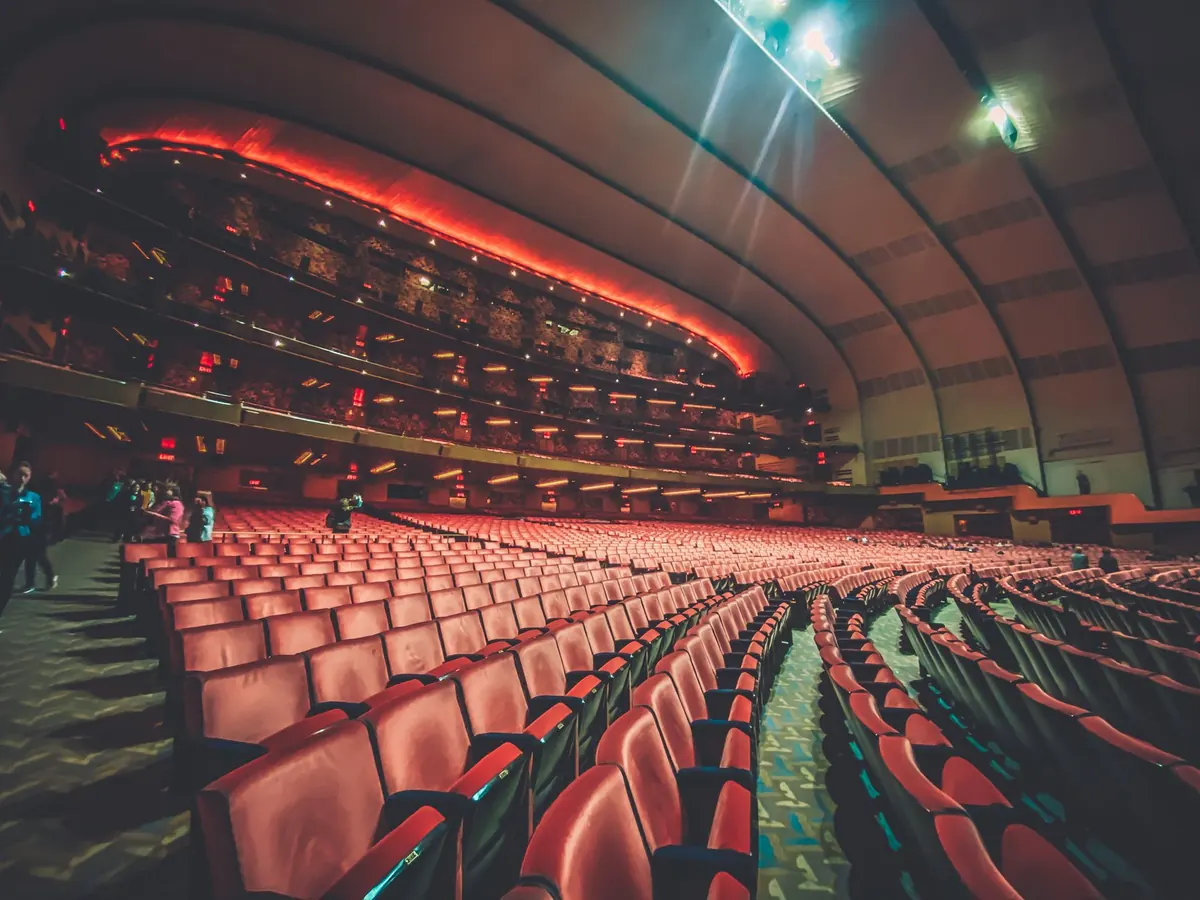
An Italian opera house is not a museum with velvet seats. It is a working room where the audience is part of the performance: people lean over box rails to argue about a tenor, the gallery boos as loudly as it cheers, and the interval is a social event in its own right. That is good news for a first-timer. You do not need to be an expert, own a tuxedo, or know the libretto by heart. You need to know a handful of practical things about the building, the seating and the rhythm of the evening — and then you can relax and watch.
The Building Comes First
Most historic Italian theatres are horseshoe-shaped: a deep stage, a curving ring of boxes, and a gallery at the top. This shape exists for sound, not for sightlines. Voices carry up and around the curve remarkably well, which is why the cheapest seats in the house often sound better than the expensive ones at the back of the stalls. It also means that from a side box you may be looking at the singers almost in profile, or seeing only half the stage.
Two practical consequences. First, check the seat description when you book: Italian box offices usually flag visibilità limitata or visibilità parziale, and those notes are honest, not cautious. Second, expect the building to be old in ways that matter — narrow marble staircases, few lifts, queues for the women's bathroom that start before the curtain even falls. Wear shoes you can climb in.
What to Wear Without Overthinking It
The short answer: nobody is inspecting you at the door, and formal dress codes are rare outside of gala evenings. The longer answer is that Italians dress for the occasion, and a little effort reads as respect rather than pretension. Aim for "dinner at a good restaurant", not "wedding" and definitely not "beach".
- Men: dark trousers, a button-down shirt, a jacket if you have one. A tie is optional and increasingly uncommon outside opening nights.
- Women: a dress, or trousers with a nice blouse. Comfortable but smart shoes — you will stand during the intervals and possibly on stone steps.
- Opening nights and galas: darker and more formal, especially La Scala's season opener on 7 December. If you have a ticket to one of those, dress up.
- Summer and open-air venues: lighter fabrics, a linen jacket, a scarf or wrap for later. Evenings outdoors can turn cool and mosquito-bitten.
- Avoid: shorts, flip-flops, vests, caps, and anything that rustles loudly every time you move.
One more note: historic auditoriums can be warm once the lights go down and several hundred people are breathing in the same room. Layers are your friend.
Where to Sit: Boxes, Stalls, and the Loggione
Seating is the single decision that most shapes your first evening, and price does not map neatly onto enjoyment. Here is how to think about it.
- Stalls (platea): the most comfortable and the most expensive. Great for seeing faces and reading surtitles if the screens are at the front. Sound is good but not necessarily the best in the house.
- First and second row of boxes (palchi): the classic Italian experience. Intimate, social, wonderful for watching the audience as well as the stage. Central boxes in the first two tiers are excellent; the further round the curve you go, the more limited the view.
- Upper boxes and gallery: cheaper, and often acoustically superb. Sightlines get tight; you may be watching a slice of stage. Some seats are marked as standing or as stools behind a rail.
- The loggione: the top gallery, the cheapest seats, and the loudest, most knowledgeable audience in the building. It is a wonderful place to learn how Italians respond to opera — and the place from which most of the booing comes.
A word on open-air venues
Summer opera in Italy often means amphitheatres and squares: the Arena di Verona, the Puccini Festival at Torre del Lago, performances in Roman ruins. Seating may be stone steps, so bring or rent a cushion, arrive early, and expect a long evening with a real interval for food and wine. These are relaxed, festive occasions — but the music is taken just as seriously.
When to Clap, and When to Hold Back
This is where first-timers worry most, and the honest answer is that Italian audiences are generous with applause. Applause after a well-sung aria is normal and welcome; singers expect it, and sometimes the orchestra has to wait for it to die down. Clap at the end of an act, after a famous aria, and at the curtain calls. Shout bravo for a man, brava for a woman, bravi for several, brave for an all-female group — and do not worry if you get it wrong; half the audience does.
Where to be careful: do not clap during the music, including over the last chord of a number, and do not applaud in the middle of an overture. If the house falls silent and the conductor holds the pause, stay silent with it. Booing exists in Italy, mostly from the gallery toward directors and occasionally singers; you are not obliged to join in, and it is not rude to refrain.
The Rest of the Etiquette
Phones off, not just silent — screens in a dark auditorium are more distracting than ringtones. No photography during the performance; most houses allow it during curtain calls. If you arrive late, ushers will hold you at the back until a suitable pause, sometimes until the interval, and arguing will not help.
Do not eat during the performance. Cough drops unwrapped in advance are a kindness to everyone around you. Talking above a whisper is the one thing Italian audiences genuinely will not forgive, though a whispered translation of the plot is fine.
Surtitles are common in the major houses but not universal, and in smaller theatres you may get nothing at all. Read the synopsis on the theatre's website before you go, or at least the first act. It changes the evening completely.
Small Practicalities That Save the Evening
Performances usually start between 8pm and 9pm and run long; with two intervals you might leave close to midnight. Check the last metro or train before you book, and consider how you will get home. Arrive twenty to thirty minutes early to collect tickets, find your seat and look at the building. During the interval, head to the bar the moment the curtain falls or wait until the rush passes — the queue can swallow the entire break.
Buy tickets from the theatre's own box office or an authorised seller, keep the confirmation on your phone, and bring identification in case it is asked for. If a performance is sold out, standing places and returns sometimes appear at the box office on the day.
A Short Checklist for Your First Night
Book a seat with an honest view rather than the most expensive one. Dress as you would for a good dinner. Read the plot beforehand. Turn the phone off. Arrive early, climb the stairs slowly, and let the usher show you to your place. Clap when the aria ends, stay quiet when the lights are down, and save your opinions for the interval. Then let the evening do its work — the first time a voice fills one of those horseshoe rooms without amplification is something you will remember longer than the outfit you wore.
Photo: Keenan Constance / Pexels